
Using Contingent Contracts to Break Negotiation Deadlocks
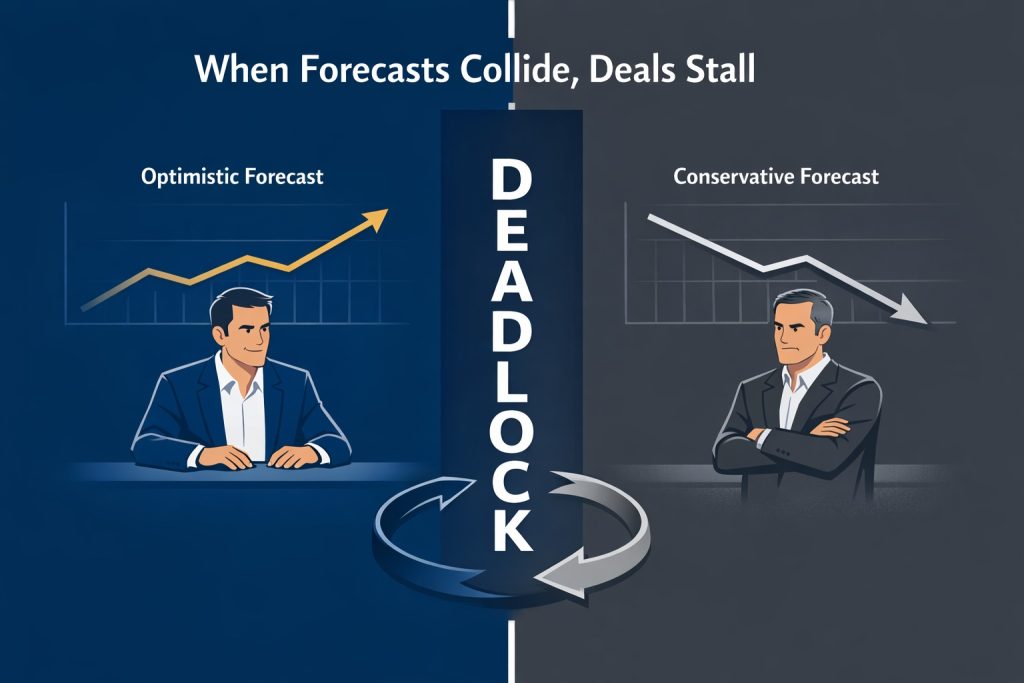
Most negotiation impasses don’t occur because one party is unreasonable. They occur because both sides genuinely believe they are right. You forecast strong growth. The other party is conservative. You believe performance will improve. They doubt it. The discussion circles around projections, spreadsheets and assumptions – and progress stalls.
For owner-operated businesses, these deadlocks are more than frustrating. They delay revenue, increase risk and often end with unnecessary concessions just to get the deal done.
There is a commercially disciplined way to move forward without giving ground prematurely: structured contingent contracts.
Why Negotiation Deadlocks Matter to You as an Owner
When negotiations stall over future uncertainty, the impact flows directly back to you.
Time: You become the escalation point. Energy that should be focused on growth is spent managing drawn-out discussions.
Profitability: Concessions made to break deadlocks often weaken margins and set precedents for future deals.
Risk: Overly rigid agreements expose you to downside scenarios. Overly flexible agreements expose you to exploitation.
Business value: A business that consistently struggles to structure balanced agreements signals weak commercial positioning – something buyers and investors notice.
Strong negotiation capability is not just a soft skill. It is part of a disciplined business strategy and commercial risk management.
Contingent contracts are one of the most practical tools available when forecasts are the sticking point.
What a Contingent Contract Actually Does
A contingent contract links part of the agreement to future outcomes. Instead of arguing over who is correct about the future, you structure the deal so that:
- If X happens, the agreement adjusts in one direction
- If Y happens, it adjusts in another.
Rather than debating projections, you allow performance or market conditions to determine value allocation. This approach transforms opinion-based conflict into a measurable structure.
For owners, that matters because it protects both downside risk and upside opportunity.
Principle 1: Stop Arguing Over Forecasts – Design for Them
What owners commonly get wrong is trying to ‘win’ the forecast argument. Forecasts are inherently uncertain. When negotiations hinge on:
- Future revenue
- Cost movements
- Performance improvements
- Market growth.
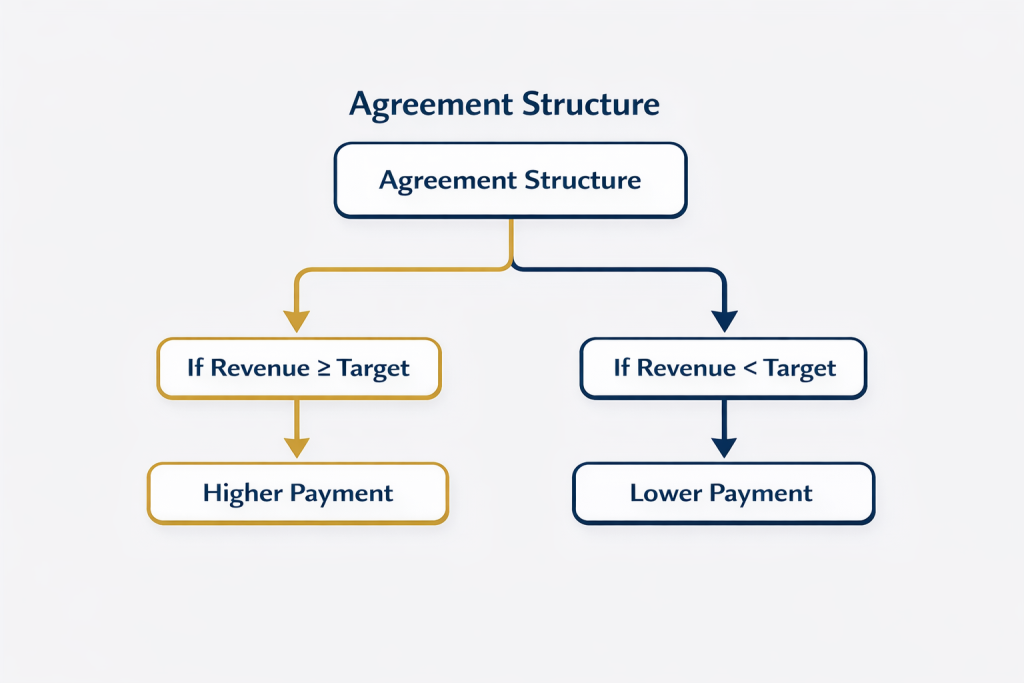
The conversation becomes positional. Effective negotiations shift the structure of the negotiation to:
- Earn-out arrangements in business sales
- Performance-linked pricing
- Revenue thresholds that trigger bonuses or rebates
- Cost-adjustment clauses tied to agreed indices.
Instead of conceding price today, you link outcomes to measurable results tomorrow. Commercially, this protects profits without damaging relationships and losing the deal.
Principle 2: Use Risk-Sharing to Strengthen Agreements
Many negotiations stall because one party seeks certainty while the other faces volatility. For example:
- A client wants fixed pricing
- You face fluctuating input costs.
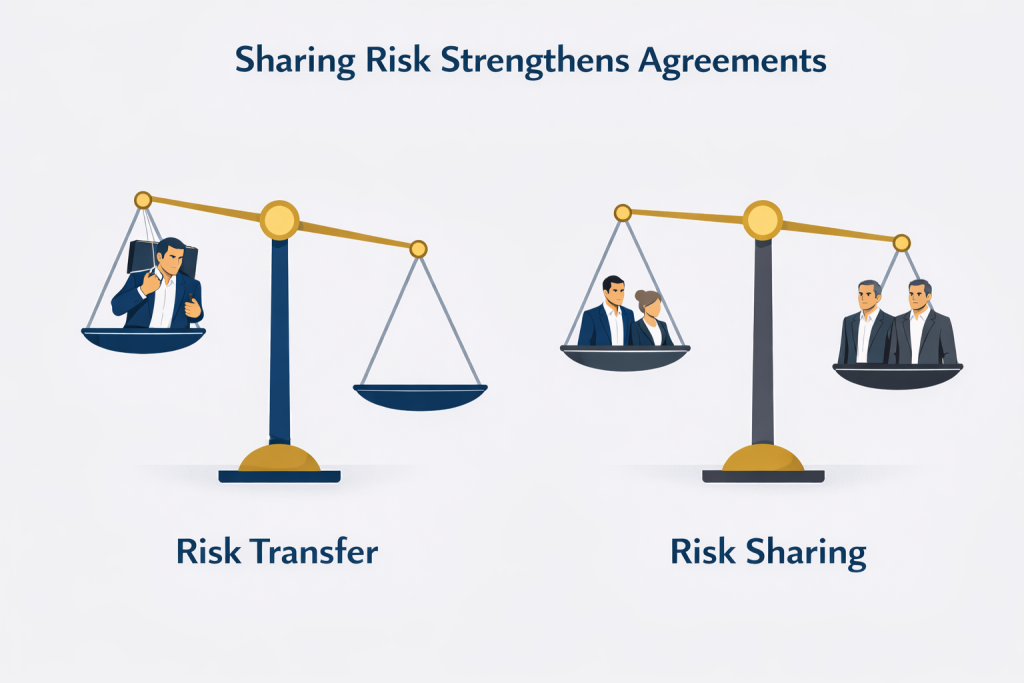
Rather than rejecting the deal or absorbing all risk, a contingent contract might state:
- Pricing remains fixed unless costs exceed a defined threshold.
This shares the risk rather than transferring it.
For owner-operated businesses carrying personal financial exposure, structured risk-sharing reduces the chance that external volatility becomes personal liability.
This type of disciplined thinking often emerges where risk tolerance and financial resilience are clarified in advance.
Principle 3: Align Incentives Through Measurable Outcomes
Contingent contracts are particularly powerful when performance is uncertain. In joint ventures, sales partnerships or business acquisitions, disagreements frequently centre on future contribution and value.
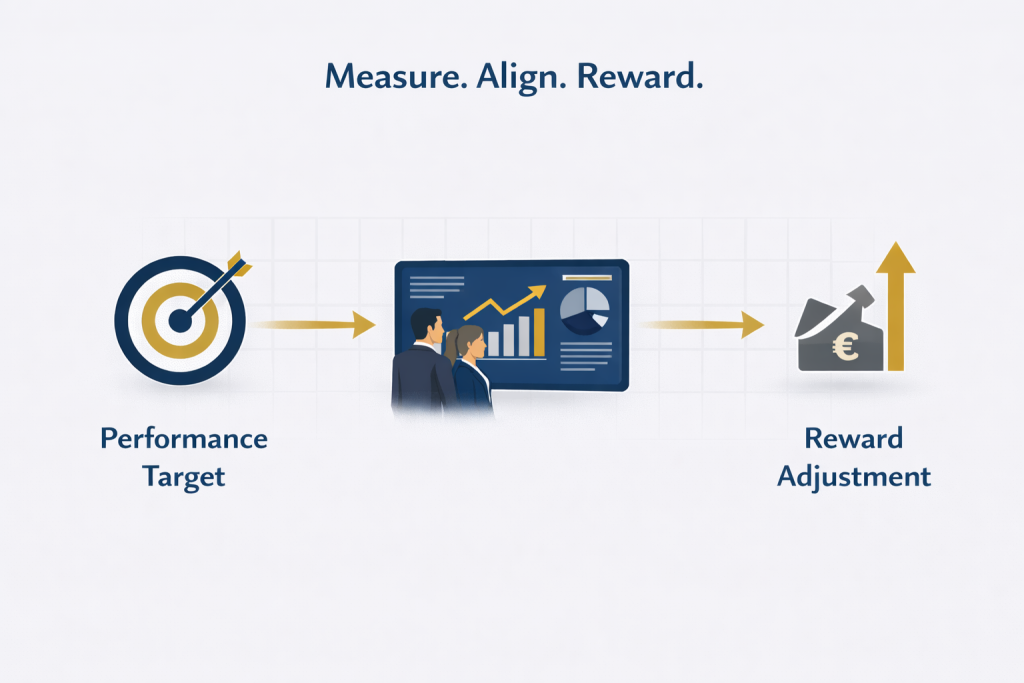
Instead of arguing over valuation, you might structure:
- Equity adjustments based on performance
- Bonuses linked to profitability targets
- Milestone-based payments.
When incentives align with measurable results, accountability improves. For owners, that translates into stronger execution, clearer expectations and reduced future disputes.
Principle 4: Clarity Prevents Future Conflict
A poorly drafted contingent contract creates more problems than it solves. What owners commonly overlook is measurement. Outcomes must be:
- Clearly defined
- Objectively measurable
- Difficult to manipulate
- Time-bound.
Ambiguity simply postpones the dispute.
Well-run businesses insist on clear metrics and, where appropriate, independent verification. Clarity reduces the likelihood that you will be drawn back into conflict resolution later, which protects your time and lifestyle.
Principle 5: Use Contingencies to Test Confidence
Contingent contracts can also reveal whether the other party truly believes their own projections. If someone is highly confident about performance:
- They should be willing to link outcomes to it.
If they resist tying compensation or terms to measurable results, that resistance provides valuable information.
Used appropriately, contingent contracts protect you from overpaying for optimism.
Principle 6: Know When Simplicity is Better
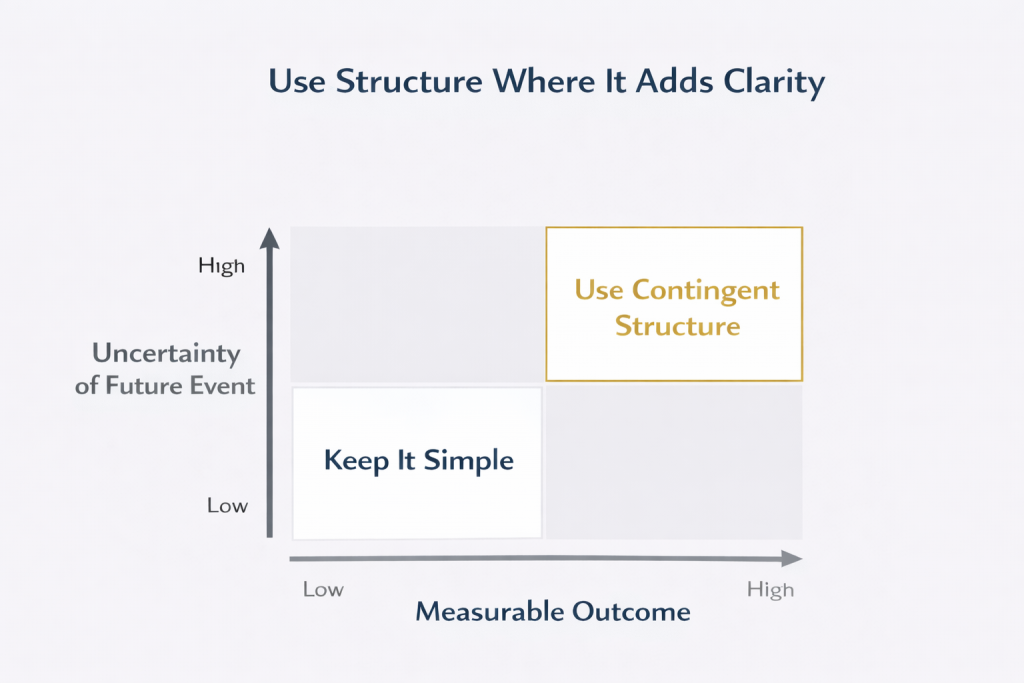
Contingent contracts are not suitable in every negotiation. Avoid them when:
- Outcomes cannot be measured reliably
- The administrative burden outweighs the benefits
- Trust is so low that enforcement becomes contentious.
Experienced owners exercise judgement. The structure of negotiations should simplify commercial risk, not unnecessarily complicate operations.
What This Means for You as an Owner
If you regularly encounter:
- deadlocks over projections,
- pressure to concede on price,
- disputes linked to performance assumptions, or
- ongoing tension around valuation;
Then your negotiation structure may need strengthening.
Used properly, contingent contracts:
- Break impasses
- Protect margins
- Share risk
- Improve accountability
- Preserve long-term relationships.
Over time, this strengthens resilience, improves profit quality and enhances business value.
A Measured Next Step
At Fortitude Business Consulting, we work with owner-operated businesses to strengthen commercial discipline – including negotiation strategy, pricing frameworks and risk management structures.
Negotiation deadlocks are often symptoms of deeper strategic positioning issues.
If deals consistently stall or require uncomfortable concessions to close, it may be worth reviewing how your agreements are structured and whether they are protecting the business you are building.
In most cases, stronger outcomes begin with clearer thinking before you agree.
If you’d like help creating and implementing contingent contracts to help break negotiation deadlocks, call Fortitude Business Consulting on 1300 551 040.